The Hobby-Hopping Myth: Changing Interests Is Not Failure
Hobby-hopping can be a sensible way to explore pastimes: set a small trial, notice what you enjoy, and leave without treating a change as failure.
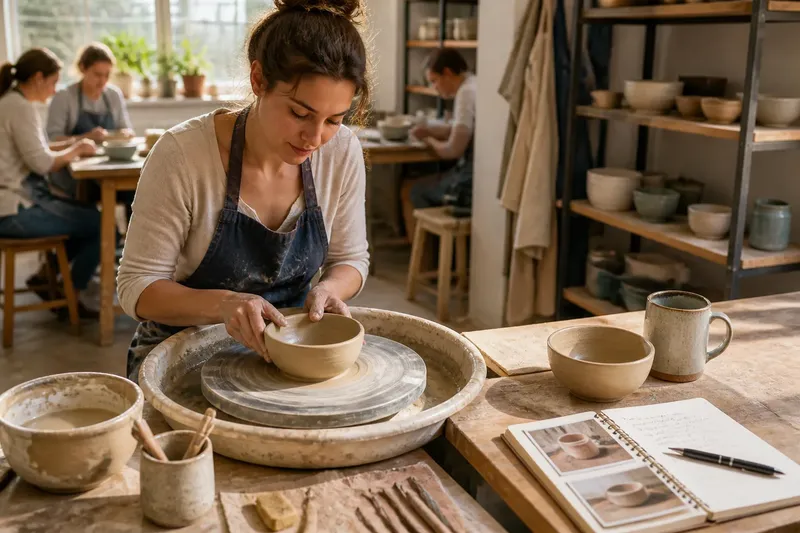
Hobby-hopping is not a character flaw: an interest can be a useful trial even if you later set it aside. Imagine Rowan, who signs up for a beginner pottery class after admiring handmade mugs, then discovers that the appeal was the objects, not the weekly studio routine. What Rowan does next matters less than treating that discovery as information rather than evidence of failure.
That distinction is easy to miss. Leisure often comes wrapped in stories about dedication: buy the proper kit, practise regularly, improve, and stick with it. Those habits can suit a pastime, but they are not the admission price for enjoying one. A trial can be worthwhile because it clarifies what you like, what you dislike and what conditions help you relax.
Rowan’s first commitment
Rowan begins with a practical question: could pottery become a regular part of the week? The local community studio offers an introductory course, and Rowan books a place, buys an apron and a basic set of tools, and tells a friend about the plan. None of those choices is foolish. The trouble starts only when a modest experiment is silently recast as a promise to become a potter.
At the first session, Rowan enjoys wedging clay and seeing how a lump changes on the wheel. The room is busy, the instructor demonstrates clearly, and there is pleasure in making something with the hands. Rowan leaves with muddy sleeves and a lopsided bowl in progress. The experience is mixed, not a verdict.
After a few classes, the contrast becomes clearer. Rowan likes the tactile work and the company, but dislikes having to attend at a fixed time and is less interested in the repetitive centring practice than expected. The bowl is still absorbing; the schedule is not. A hobby does not have to be either a complete success or a complete waste.
A trial, not a character test
Rowan’s useful move is to separate the activity into parts. “I like pottery” is too broad to guide a decision. “I like handling clay, learning a craft and making functional objects, but a weekly class feels constraining” gives Rowan something to act on.
This is the central value of trying a pastime: it reveals the shape of the enjoyment. Someone might love the quiet concentration of model-making but dislike the cost of specialist supplies. Another person might enjoy singing with a group yet have no desire to practise alone. Neither discovery means that the person lacked discipline or chose badly.
It also helps to distinguish friction from disinterest. A new pastime can feel awkward because its basic skills are unfamiliar; that discomfort may ease with guidance. But if the main pleasure is absent, or the format repeatedly clashes with ordinary life, there is no need to turn perseverance into a moral test. Rowan can decide whether another class would answer a real question or merely postpone an uncomfortable decision.
Choosing what to try next
Rowan does not immediately buy a home pottery wheel or sign up for a longer course. Instead, Rowan asks what part of the experience is worth keeping. The answer is making with the hands, learning through demonstration and seeing a practical object take shape. Those preferences suggest alternatives without demanding a permanent identity.
Rowan borrows a small air-dry clay kit from a neighbour and tries shaping a simple spoon rest at the kitchen table. This is not a claim that home clay work is the same as studio pottery: it is a low-commitment way to check whether shaping objects remains enjoyable without the fixed class schedule. Rowan might also visit a community craft fair, take a one-off workshop in another material, or simply keep using the handmade bowl once it is finished.
There is no need to sample every related craft. Rowan chooses one small next experiment because it answers a specific question: is the pleasure in working with clay itself, or in the social, scheduled class? Keeping the question narrow makes the result easier to interpret and limits the temptation to shop for a whole new hobby before knowing what is appealing.
When should you keep going?
How long should I try a new hobby?
Choose a trial long enough to experience the activity’s ordinary rhythm, not just its first, novelty-rich session. The right span depends on the pastime, the available sessions and what you want to learn; decide what question the trial should answer before extending it.
What if I have already bought the equipment?
Past spending cannot make future enjoyment more likely, so treat it as a separate decision. Keep, lend, sell or donate usable items according to their condition and your plans, rather than adding further purchases to justify the first ones.
Is it bad to have several unfinished hobbies?
Not by itself. Unfinished projects may reflect changing interests, limited time or a preference for exploration; the practical concern is whether clutter or recurring expense is becoming unwelcome.
How can I tell boredom from beginner frustration?
Look at the moments around the difficult part: do you want to return when the task feels manageable, or are you mainly trying to satisfy an obligation? A teacher, beginner group or simpler exercise may help distinguish a learnable obstacle from an activity that does not suit you.
Leaving without a grand finale
When the pottery course ends, Rowan thanks the instructor and does not enrol in the next block. Rowan finishes the bowl at the studio, takes it home and uses it. The result is not a dramatic conversion or a clean rejection; it is a small, satisfying object and a more precise sense of what kind of making fits.
That is enough. Rowan can return to pottery later, perhaps in a one-off workshop, or never return at all. An interest does not need to become a lifelong pursuit to have provided an enjoyable evening, a new skill or a clearer preference.
It is not worth the effort to invent elaborate rules for how many sessions count as “giving it a chance”, or to keep a pastime alive solely because other people know about it. A brief note after trying something can be more useful: what felt absorbing, what felt like a chore, and what would make another attempt appealing? Keep it private and practical; this is a decision aid, not a performance record.
Making room for change
Rowan’s change of direction does not erase the pleasure of the first classes. It shows that an activity can be a good fit in one respect and a poor fit in another. Once interests are treated as trials rather than tests of character, stopping becomes a normal part of choosing how to spend leisure time.
For your next hobby, set a modest boundary before you begin: borrow equipment, book a single session or use a beginner kit, then notice the experience without demanding a future identity from it. Hobby-hopping can lead to a lasting passion, but it can also end with a useful answer and a free evening. Either result is a reasonable return on curiosity.