A Clear Turn Sequence Keeps a Board Game Moving
Board game turn structure helps players see whose turn it is, what to do next and when play passes on, so the group can focus on its choices.
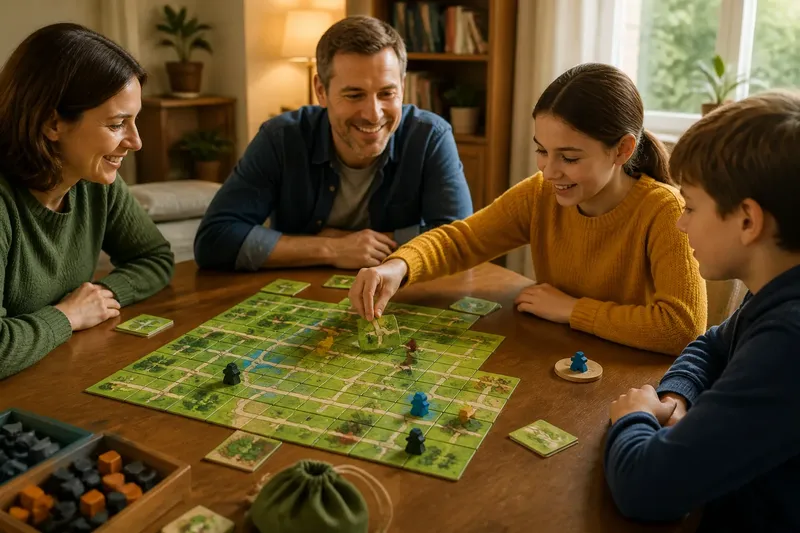
A clear board game turn structure keeps play moving because every player can see who acts, what happens during a turn and when the next player begins. Teach one repeatable sequence first, then add exceptions only when they affect a choice at the table.
Build a clear sequence
For a beginner-friendly game, state three things in order: who acts, which actions are available and how the turn ends. For example: “It is Maya’s turn. Choose one action, resolve it, then pass the marker left.” Keep the wording close to the actual rules.
A fixed sequence is useful when players need help remembering what comes next. If every turn follows the same order—draw a card, take an action, then pass—the group can learn the rhythm through play. An open turn, where players choose and order several actions, offers more freedom but asks them to track more rules.
Choose a turn format
In sequential play, one player completes a turn before the next begins. This suits games where a move changes the board or shared resources, since everyone can see the result before acting.
Simultaneous play lets players choose at the same time, often by selecting a card or writing down an action before a shared reveal. It can keep a group engaged while others are deciding, but the signal and resolution order must be plain: say when choices are final, reveal them together, and explain how ties or conflicts are handled.
Neither format is automatically better. Use sequential turns when choices depend on the latest board state; consider simultaneous choices when players can decide independently and the group can follow a clear reveal cue.
Make the hand-off obvious
Put a turn marker beside the active player and pass it when their turn ends. If the game has a printed player order, point it out before play. For a game with phases, write their names on a small reminder card or use the board’s phase track rather than adding a second set of rules.
Ask players to announce a move when it changes a shared piece or resource, then say when they have finished. This gives the table a clear hand-off and makes it easier to notice an out-of-order move before more actions depend on it.
Check the turn sequence?
What is the easiest turn pattern to teach?
Use a short, repeated sequence: name the active player, state the available action and explain how the turn ends. Demonstrate one turn with the actual cards or pieces, so players can connect each instruction to the game.
When does simultaneous play suit a group?
It suits a group whose players can choose without watching every move and can wait for a shared reveal cue. If players talk over one another, make the pause and reveal explicit or use sequential turns instead.
How much choice should a new player get?
Explain the legal actions and any limit on how many a player may take. Leave strategic advice for later unless it changes what a player is allowed to do.
What if players keep asking whose turn it is?
Place a visible marker beside the active player and pass it at the end of each turn. If the order is fixed, point to the next seat before play starts and keep the same direction throughout the game.
Use a short teaching script
Say the turn sequence aloud in the order it happens: “Choose one action, resolve it, then pass the marker to the next player.” Show each part with the board or pieces. If the game has phases, name them and point to the component that signals each transition.
Say you are teaching an invented route-building game to a family after supper. The hypothetical starting rule is that each player draws one tile, places it, then passes a marker clockwise. You place the marker by the first player, demonstrate drawing and placing a tile, and pass the marker left; the observable result is that the next player knows they are active and can repeat the same sequence. If the game instead allows several actions in any order, explain the action limit before the first turn and show where players can check it.
It is not worth explaining every rare exception or clever combination before anyone has made a move. That can bury the basic rhythm; keep the rulebook nearby and check an unusual case when it arises.
Fix common snags
- Check whether a turn marker is beside the person taking their turn; if it is missing or elsewhere, put it beside the active player, or point to the printed player order as an alternative.
- Check whether everyone can name the next action; if they cannot, read the sequence aloud and show it with a piece, or use a brief reminder card as an alternative.
- Check whether a player has finished before the next person begins; if the hand-off is unclear, ask the active player to say “finished”, or pass a marker visibly as an alternative.
- Check whether a simultaneous choice is final before the reveal; if players are still changing their minds, pause and set a clear stop signal, or switch to sequential turns as an alternative.
- Check whether a phase transition is visible on the board; if it is not, point to the phase track or write the phase names on a small card as an alternative.
- Check whether an out-of-order move has affected later actions; if it has not, restore the marker and resume, or pause to agree on a simple rewind if everyone understands the correction.
Match rhythm to players
For a group new to a game, prefer a visible order and a repeated sequence. For a lively gathering, consider brief turns or simultaneous choices if the reveal rule is easy to follow. For players who enjoy planning, an open turn can work when its action limits are clear.
The practical measure of a useful board game turn structure is whether players can identify the active player, their choices and the hand-off. If any of those remain uncertain, simplify the explanation or make the sequence visible before adding another rule.