Sketchbook or Loose Sheets for Drawing Away from Home?
Choose a sketchbook or loose sheets for drawing away from home by matching portability, page order and unfinished work to the way you actually draw.
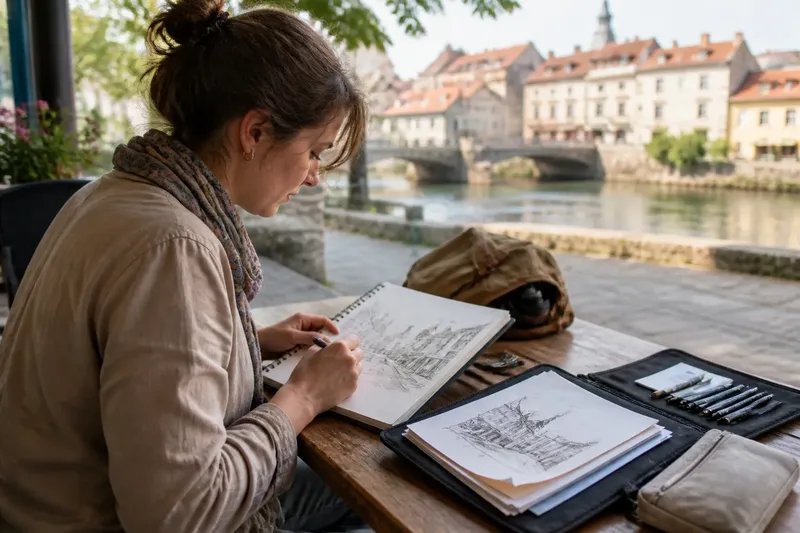
A sketchbook or loose sheets can make the difference between drawing during an outing and carrying materials you never use. The best choice depends less on artistic style than on what happens when you need to work in a cramped seat, leave a drawing unfinished or find a particular page later.
Think of the format as a way to manage paper while you draw. A bound book keeps pages together, while loose sheets let you choose, rearrange and protect each drawing separately. If one format causes recurring small frustrations, change that part of the setup before replacing all your materials.
Pages that get in the way
A sketchbook can be awkward on a narrow café table or a moving train. Its covers take up space, and the binding may resist lying open near the centre. If you press hard to flatten it, you risk stressing the spine or disturbing work on the facing page.
Try a smaller book that opens comfortably, or choose one with a binding suited to the way you hold it. A clip can keep pages from lifting, but avoid clamping over a drawing. If the book still feels cumbersome, a slim folder of loose sheets may fit the setting better.
Loose paper has the opposite nuisance: it slides, bends or catches the wind. Keep a few sheets in a rigid-backed portfolio or between two pieces of card, and take out only one at a time. A large stack is rarely worth the effort; it adds bulk and makes it harder to keep track of the sheet you are using.
Page order goes missing
With a sketchbook, sequence is built in. That helps when you want to look back at a walk or find a drawing by turning pages, but it can become frustrating if you skip around or use different subjects side by side. A book’s order records where each drawing landed, not necessarily how you want to sort it later.
Use a small pencil note in a corner or on the reverse: a place name, subject or short prompt is enough to jog your memory. If you prefer a tidy sequence, reserve a run of pages for one outing and leave a blank page between unrelated subjects. Don’t spend the journey devising an elaborate indexing system; a few clear cues are usually easier to maintain.
Loose sheets are easy to group after the fact, but only if you mark them before they become a pile. Put a brief note on the back or on a removable slip, then keep finished and unfinished pages in separate pockets. If you dislike writing on the paper, number sheets lightly in a margin that can be trimmed or hidden.
Unfinished work travels badly
A drawing left in a sketchbook stays attached to its neighbours. That is convenient, but it can make an incomplete page feel as if it must be finished before you can move on. It may also be difficult to return to the work without disturbing the next page, especially if the drawing medium can transfer or smudge.
Before closing the book, place a clean sheet of interleaving paper over work that could mark another page. Add a brief note beside the drawing or on a separate slip describing what you meant to revisit. A note such as “darken the roofline” gives you a clear re-entry point without turning a relaxed outing into a formal record.
Loose sheets make it easier to isolate a drawing, but an unfinished page can disappear among other papers. Slip it into a clearly designated pocket rather than putting it back with blank sheets. Imagine you sketch a half-finished street corner on a bench, then need to catch a bus: placing that sheet in the folder’s “continue” pocket keeps it separate, and the note “add shop signs” makes the next session easier to resume.
Materials need different handling
Paper choice matters more with loose sheets because you select and protect each piece yourself. A light sheet can be comfortable to carry but may buckle under damp media or heavy erasing. A firmer sheet may stay flatter, yet take up more room in a folder.
For pencil or pen, a simple pad or portfolio may be enough. If you use water-based media, check the paper’s suitability and carry a backing board; do not assume every sketchbook page will behave alike. Follow the paper and medium makers’ instructions where they apply.
A bound book offers a ready-made cover and fewer loose edges, but the paper may not suit every medium. If you switch between pencil, ink and wash, consider whether one book’s pages meet your needs or whether separate sheets will let you choose more deliberately. Avoid carrying a full range of tools just to compensate for a paper format that does not work for you.
Which format suits your habits?
Is a sketchbook better for quick outings?
It can be, if you like opening to the next page and keeping drawings together. Choose one that fits your bag and can be held securely, rather than picking a book by appearance alone.
Are loose sheets better for larger drawings?
They can be easier to position and remove from a folder, particularly when a bound page would be cramped. Carry a firm support and a way to protect the drawing from folds and rubbing.
How do I keep loose drawings in order?
Mark each sheet with a discreet subject or location note, then use separate pockets for blank, active and finished work. Keep the system simple enough to use while packing up.
Can I use both formats?
Yes: a sketchbook can hold quick observations while loose sheets are reserved for work that needs a particular paper or more room. Decide which job belongs to each format before leaving, so you do not carry duplicate supplies without a reason.
A useful choice for travel
Choose the format that removes the most frequent obstacle. If you lose loose pages or dislike sorting them, start with a sketchbook; if binding, page size or separating unfinished work gets in your way, try a folder of loose sheets. You can also make a small trial with one outing’s worth of paper before changing your usual kit.
For drawing away from home, the practical test is whether you can start, pause and find your work again without fuss. Keep the setup modest: a book or folder, a pencil, and a simple way to protect and identify pages. That leaves more attention for the subject in front of you.